Good company. A clear table. One first turn.
Make a little
room for play.
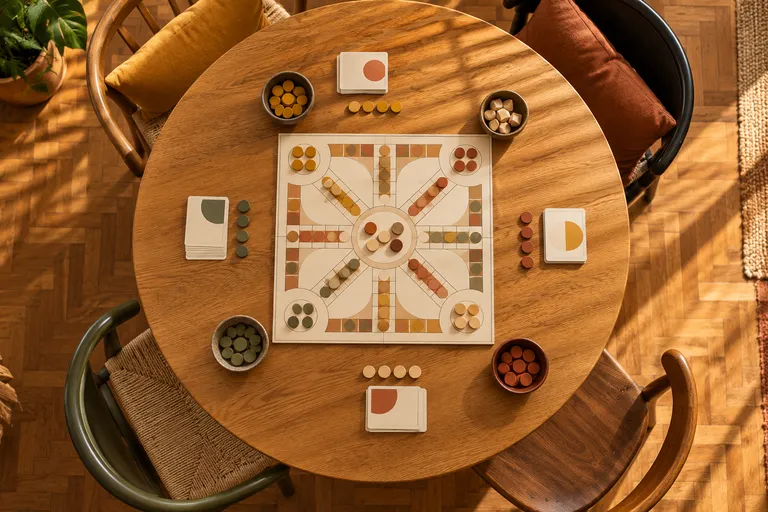
There’s a place
for you here.
A practical companion for welcoming people to the board-game table.
Arrange your tableThe best bit
is around
the board.
You do not need a perfect collection or a polished rules speech. A little preparation can make room for questions, different levels of experience and an unhurried first go.

02 / Put the evening on the table
A place for the pieces.
A place for the people.
Try an arrangement before the box opens. The shape changes with your choices; the real test is how the actual group uses the space.
for spare pieces
Your arrangement
Four people, one shared centre.
Keep a personal place for each player and check that everyone can comfortably see and reach what they need.
A conversation sketch, not a scale drawing, capacity check or access assessment. Ask the people joining you what works for them.
The sketch stays on this page. Nothing is stored or sent.
03 / The first explanation
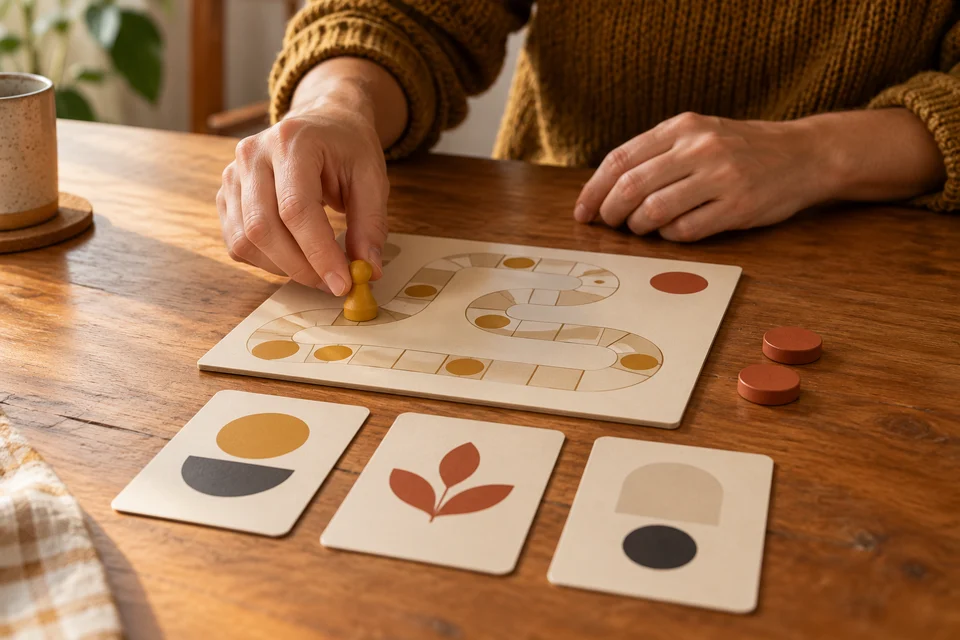
One small turn
can say a lot.
Give the move a purpose.
Begin with what players are trying to achieve. A short aim makes the pieces and the next decision easier to place.
04 / Open only what you need
A little order.
Less searching.
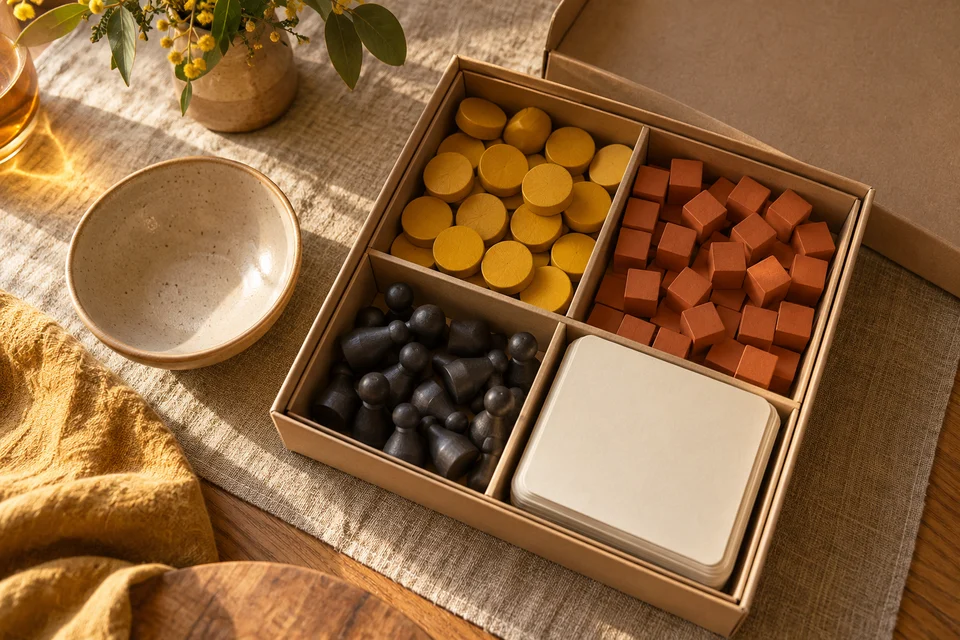
- For each person
- Put the starting pieces together before explaining what they do.
- For everyone
- Keep shared supplies visible and identify who can take from them.
- For later
- Set aside components that do not belong in the opening example.
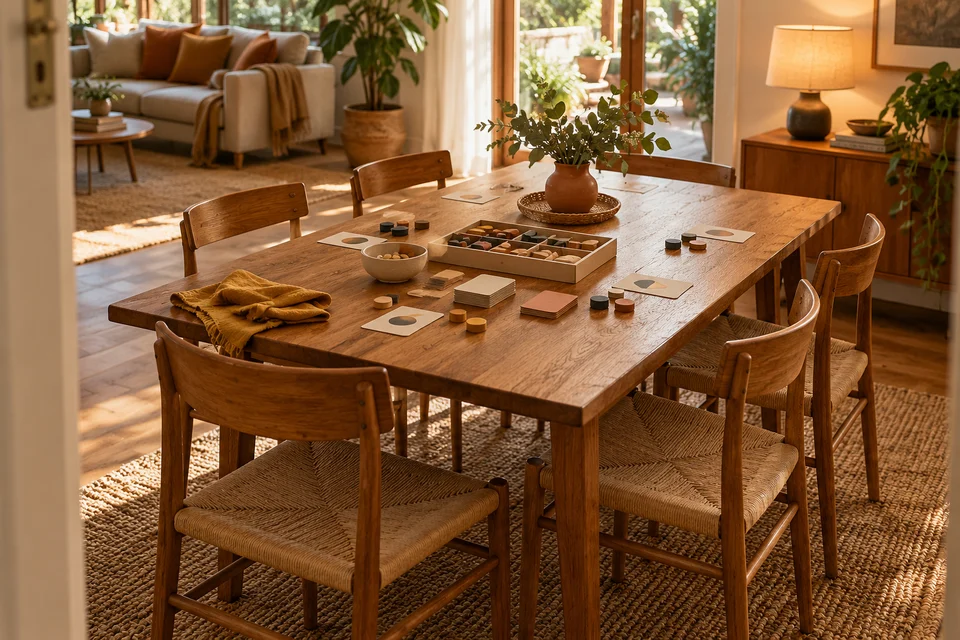
A note before people arrive
Make the
welcome clear.
Say what sort of evening you have in mind, when you expect to finish and whether the game will be new to the group. Leave room for someone to ask for a different pace.
Open the host’s preparation sheet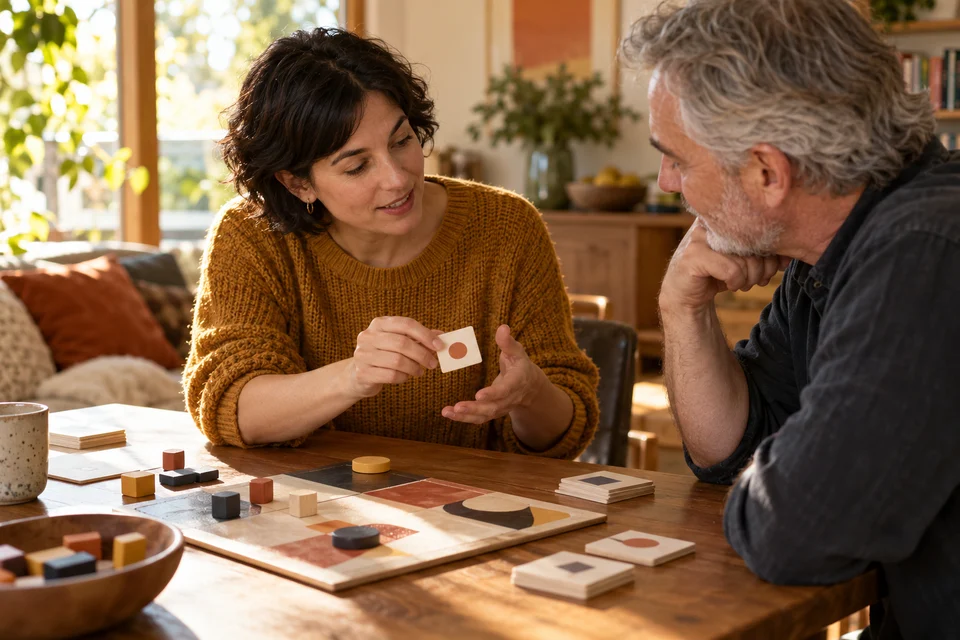
05 / Read the room
Same welcome.
A different
starting point.
“I’ll show a small turn first. Stop me whenever a piece or a word needs another look.”
Keep the opening example short and invite a question before adding exceptions.
06 / A useful bit of space
The side table
has a role too.
Spare boxes, drinks and unused pieces can have a home away from the shared board. Check that the setup still leaves a comfortable way in and out.
Walk through the room questions07 / Seen from a player’s chair
Give each place
its own breathing room.
Cards in viewLet the person choose an angle they can comfortably read.
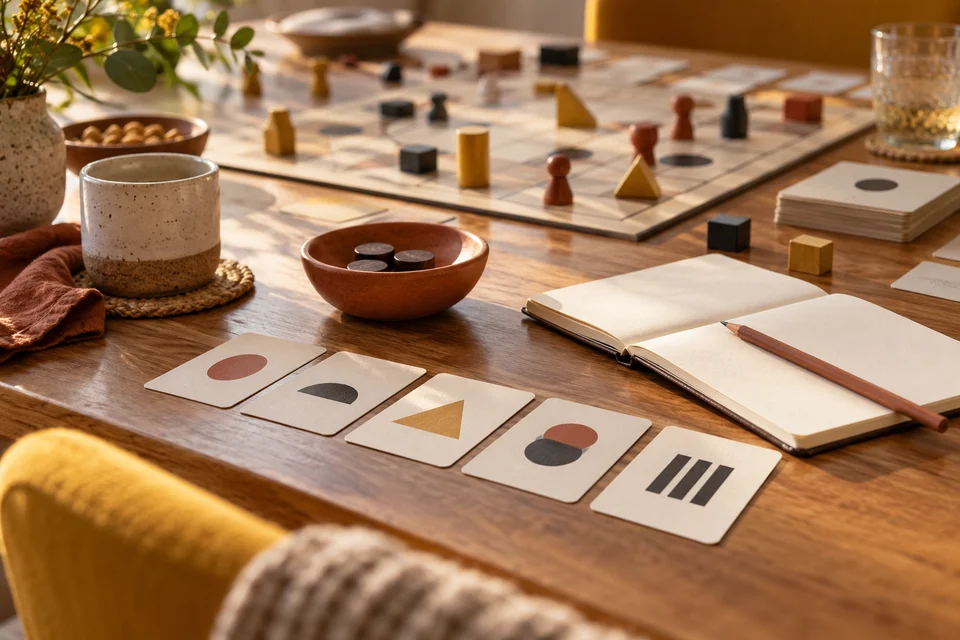
Pieces within reachOffer to move shared supplies instead of deciding someone’s move.
A question is welcomeAsk what would make the setup easier to use.
08 / Space between turns
A pause is
part of
the evening.
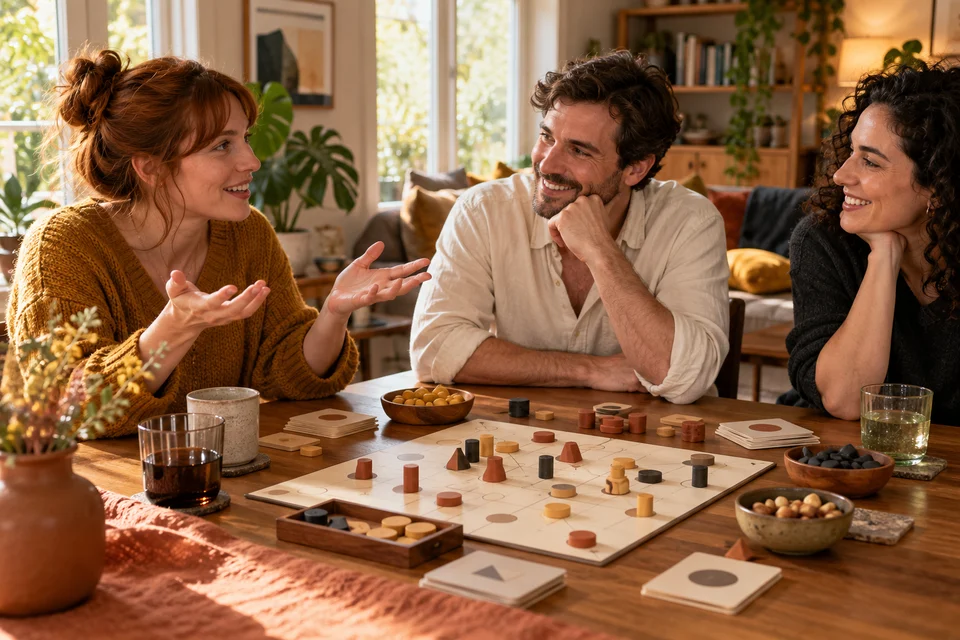
Check whether people want a quick recap, a break or a different pace. Finishing every planned game is optional.
09 / Leave the table well
One last
shared move.
- Notice
What made the game easier to join?
- Reset
Return pieces together, checking the box’s own component list.
- Leave an opening
Ask what people might like to try next time.
A few things you might ask
Before we
pull up a chair.
Is Gather Round a game shop or a booking service?
No. This site offers hosting notes, a table sketch and a small teaching example. The contact form records a message; it does not place an order or book an event.
Does the sketch tell me how many people fit?
No. It shows an arrangement, not measurements or a capacity assessment. Check the actual table, game and people’s preferences before using a layout.
Do you save the planner or checklist?
These tools run on the current page. They reset when you leave or reload. A downloaded text file is kept by your browser if you choose to save it.
Is Pocket Path a complete commercial game?
It is a small original browser exercise for practising a clear explanation. Its complete exercise rules are on the teaching mat. It does not stand in for another game’s rulebook.
Can a new player just watch first?
Ask the person what they prefer. Offer a demonstration, a practice move or time to watch, and let them decide how to join.
There is room for a note
What’s on
your table?
A question about a tool, a hosting idea or a correction is welcome. Tell us what you were trying to do and what would help.
Open the separate contact page